
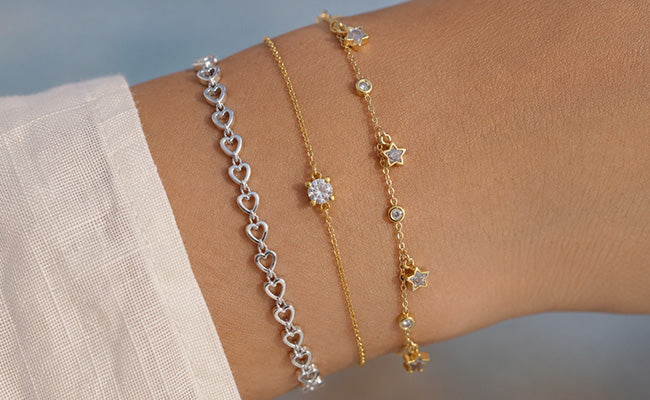

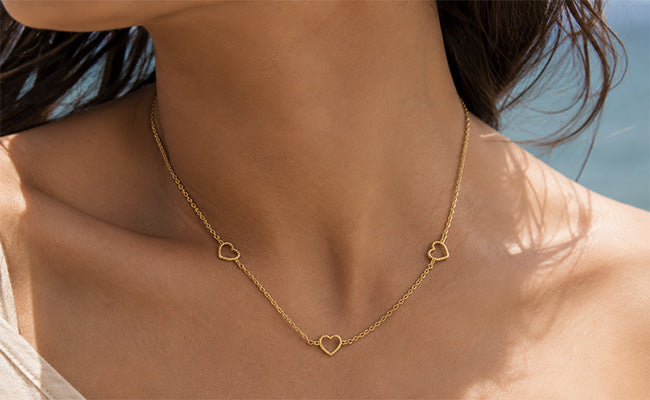


Layering gold necklaces is an easy way to make everyday jewellery feel more personal. The best combinations use different lengths, shapes and textures so each necklace has room to be seen rather than competing for the same space.
Start with pieces you already enjoy wearing, then build around them. If you are shopping for new layers, browse our gold necklaces in Australia, chain necklaces and pendant necklaces.
1. Start with two or three necklace lengths
Two or three layers are usually enough to create dimension without making the neckline feel crowded. Choose lengths that sit at noticeably different points so the chains do not overlap constantly.
A simple combination is a short chain, a mid-length necklace and one pendant that sits lower. Exact lengths vary by design, so check the product measurements before ordering.
2. Use one focal pendant
A pendant gives the eye a clear focal point. If one necklace has a larger charm or stone, keep the other layers simpler. This creates a cleaner hierarchy and lets the pendant stand out.
For an everyday option, see the Gold Teardrop Necklace, then pair it with a finer style from our chain necklace collection.
3. Mix chain textures, not just lengths
Layering works best when the pieces are not identical. A smooth chain can sit beside a finer link or a more textured design. Small changes in width and surface help each necklace remain visually distinct.
You do not need to use dramatically different pieces. A subtle contrast in chain profile is often enough.
4. Keep the overall finish intentional
For a cohesive gold look, choose necklaces with compatible gold-colour finishes. Clair De Lune gold-colour styles use plated finishes, and exact plating and base materials vary by design. Always check each product page for the specific materials and care information.
If you prefer contrast, mixing gold and silver-colour jewellery can also look modern when it is repeated deliberately across your outfit.
5. Match the layers to your neckline
Open necklines give layered necklaces more visible space. Crew necks and higher necklines can work well with longer chains, while V-necks often suit layers that follow the shape of the neckline.
The goal is to keep the jewellery visible rather than having several chains disappear under fabric.
6. Reduce tangling
Necklaces are more likely to tangle when they are very similar in length or chain weight. Using different lengths and chain profiles can help. Check your layers occasionally during the day and separate them gently rather than pulling.
When storing plated necklaces, keep pieces separated where practical and follow our jewellery care guide to help preserve the finish.
7. Build a small layering wardrobe
You do not need a large collection to create different combinations. A useful starting wardrobe might include one simple chain, one pendant and one slightly bolder necklace. Those three pieces can be worn individually, in pairs or together.
Browse all women’s necklaces, or compare gold necklaces and silver necklaces before building your next combination.
Gold necklace layering FAQs
How many gold necklaces should I layer?
Two or three necklaces are a practical starting point. Add more only when each piece still has enough space to be visible.
What necklace should be the longest layer?
A pendant often works well as the longest layer because it creates a clear focal point below shorter chains.
Can I mix gold and silver necklaces?
Yes. Mixed finishes can look intentional when the contrast is repeated elsewhere in your jewellery rather than appearing as a single accidental mismatch.


